
On a brisk Thursday morning in 2026, the gaming community found itself tangled in a web of revelations, each thread pulling at the fabric of expectation, discovery, and debate. From cryptic emblems in long-awaited sequels to walls that refuse to crumble without a communal siege, the past seven days have distilled what it means to be a player in an era shaped by both ingenuity and introspection. The industry’s pulse was loud, and every beat carried a story worth dissecting.

The quietest teaser can sometimes roar the loudest. CD Projekt Red offered little more than an Unreal Engine 5 announcement and the glint of a medallion, yet the internet erupted into a frenzy of heraldic guesswork. Some saw the feline contours of the School of the Cat, pointing toward Ciri’s legacy; others championed the fan-invented School of the Lynx, a splinter order born from Lambert’s post-Witcher 3 wanderings. The debate was sheathed almost as swiftly as it was drawn when the studio confirmed what features editor Khee Hoon Chan had already foreseen—the medallion belonged to the Lynx. What makes this moment significant is not the emblem itself but its origin. Drawing inspiration from a fan fiction, CD Projekt Red is stitching player imagination directly into narrative canon, a decision that blurs the line between author and audience. The Lynx, branching from the Wolf, feels like a natural continuation for a saga that has bid farewell to Geralt, yet it also signals a future where developer and community walk the same trail, side by side.
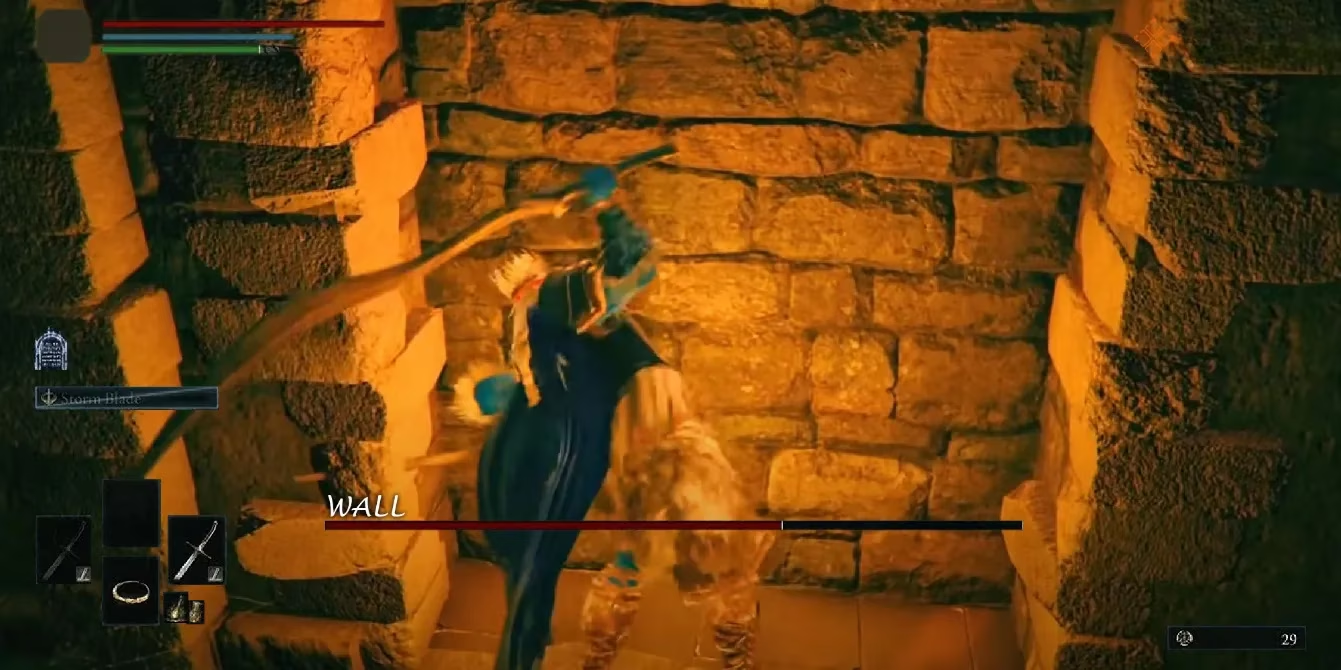
In the Lands Between, secrets do not merely hide—they resist. An illusory wall discovered in Elden Ring demands up to fifty blows to shatter, depending on weapon, poise, or perhaps the pixel struck. It leads nowhere, opens no shortcut, and offers no treasure. Lead features editor Jade King argued that the wall’s true purpose is impervious to bug reports; it is a monument to collaborative discovery, a lock without a key that the community insists on hammering open with pure collective persistence. This wall behaves less like a traditional barrier and more like a stubbornly sealed diary—every strike a desperate reader’s effort to uncover a blank page that somehow, against all logic, matters deeply. It typifies FromSoftware’s genius for fostering communion through mystery. Thousands of players gathered around a random stretch of stone, trading theories and swings, proving that even a glitch can become a shared pilgrimage when the destination is the act of wondering together.
The human cost of virtual competition rarely surfaces in leaderboard glory. When the Apex Legends Global Series banned Russian and Belarusian competitors in protest of the ongoing invasion of Ukraine, the ultimatum forced professional players into impossible choices. Features editor Ben Sledge spoke with those who fled, their journeys resembling digital nomads escaping a storm—servers beyond conflict zones became the only anchors for careers built on split-second reflexes. Not everyone could leave in time; those who did often found themselves without adequate hardware, their former setups reduced to memories in emptied rooms. Financial barriers turned relocation into a privilege rather than a plan, exposing how geopolitics can fracture even the most globalized of pastimes. In a landscape where ping and precision define success, the weight of borders became the heaviest debuff.
Beneath the surface of Half-Life 2 lies an archaeological wonder. The final release’s Eastern European melancholy diverged dramatically from the original vision, a sun-soaked, Los Angeles-inspired skyline that lingers only in concept art and leaked builds. News and photo editor James Troughton explored two fan projects—Project City 17 and Raising the Bar: Redux—that are painstakingly resurrecting the beta’s ambitions. One crafts a puzzle-driven exploration game, the other a full-fledged title aspiring to retail scope. Together, they operate like a workshop of clockmakers assembling a timepiece from scattered blueprints and broken springs, determined to hear the tick of a world that never was. This grassroots resurrection underscores how even abandoned ideas can inspire new generations of developers, proving that what never shipped can still leave a lasting impact.
The return of The Owl House for its penultimate arc has cut through plot points with the urgency of a season denied its full length, yet its emotional core remains piercingly intact. Lumity is canon, and the series explores that relationship with a tenderness that reframes its themes of belonging. Lead features editor Jade King examined Luz’s flight from her family to the demon realm, a space more welcoming of her true self. This conflict—of disappointing those you love by simply being who you are—unfolds with the delicate tension of a porcelain figurine on the edge of a shelf, trembling yet refusing to fall. Amity’s parallel struggle with openness deepens the resonance, making the show a quiet testament to the courage required in every coming-of-age.
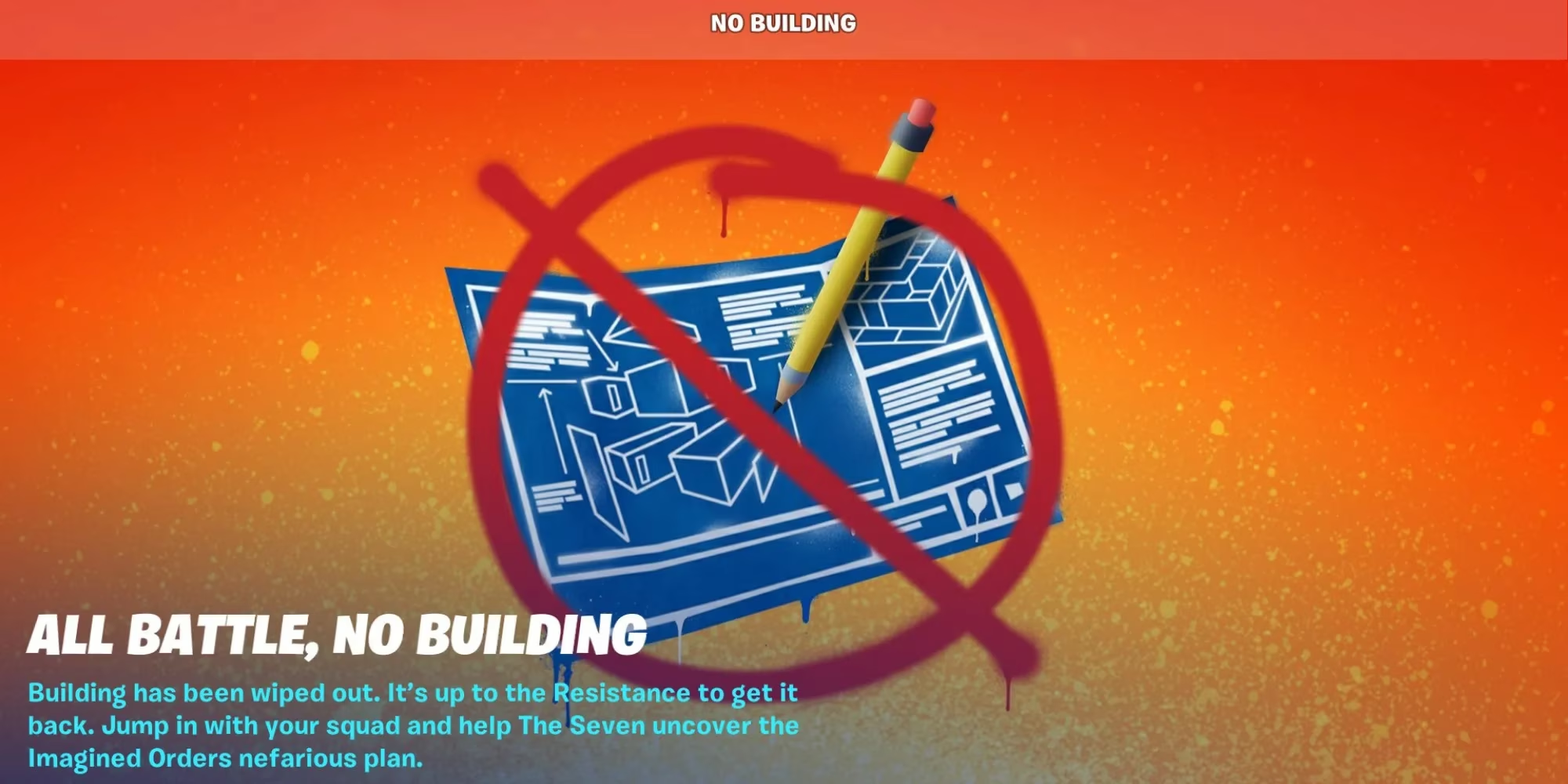
Fortnite’s decision to remove building is not a concession to the casual; it is an act of self-surgery. Editor-in-Chief Stacey Henley framed the experiment as a necessary interrogation of core mechanics, one that strips away the instant citadels to reveal a game more reliant on terrain, movement, and raw shooting. In a genre where other battle royales thrive on environmental flow, Fortnite’s no-build mode is akin to a magician voluntarily revealing his tricks, only to discover a purer form of illusion beneath. The experiment invites players to reevaluate what they thought impossible, and in doing so, it redefines the boundaries of live-service bravery.
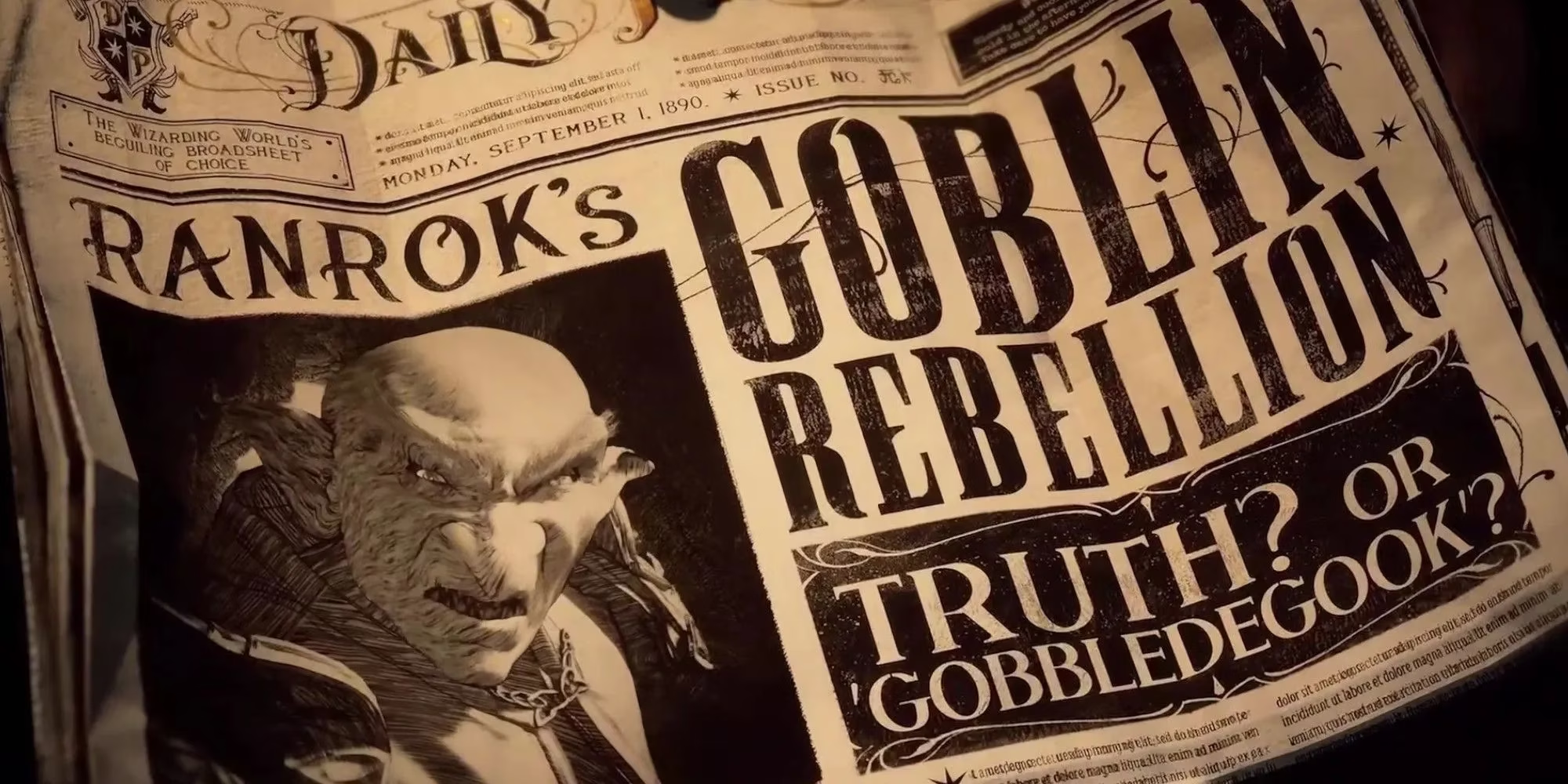
Yet for every step forward, there are shadows that refuse to retreat. The latest Hogwarts Legacy trailer thrust its goblin antagonists back into the spotlight, reigniting a long-simmering critique. These creatures, historically modelled on archaic and offensive Jewish stereotypes, are once again presented as rebellious agitators whose grievances—centuries of enslavement and land theft at the hands of wizards—are oddly framed as villainy. Stacey Henley pointed out the uncomfortable pattern: a marginalised group rises against systemic oppression, and the narrative paints them as the threat. When fiction mirrors real-world prejudice so bluntly, it demands more than suspension of disbelief; it demands accountability. In a week brimming with innovation and communion, this controversy served as a sobering reminder that the industry’s past is never truly past unless actively confronted.
The week’s tapestry, woven from medallions, phantom walls, displaced players, resurrected betas, heartfelt animation, gameplay revolutions, and enduring disputes, captures a medium in constant negotiation with its own identity. Each story, whether a bug or a feature, a triumph or a misstep, contributes to an ongoing dialogue—one that shapes not just the games we play, but the communities we become along the way.
This discussion is informed by reporting and analysis from GamesIndustry.biz, whose coverage of live-service strategy, community dynamics, and industry governance helps contextualize why moments like CDPR canonizing fan-origin lore, Fortnite stress-testing its own identity with no-build, and esports bans reshaping player livelihoods are more than isolated headlines—they’re signals of how modern games are negotiated between creators, platforms, politics, and the communities that keep them alive.