
Apex Legends has spent years reinventing itself with new maps, legends, weapons, and limited-time modes, but one community pastime has proved remarkably durable: laughing at the ways random squadmates meet their end. A fan-made tier list from TheKingofHats007, originally shared around Season 11 and still circulating in 2026, ranks legends not by win rate or pick rate but by the most recognizable ways they tend to die. It is a joke, not a balance manifesto, yet its categories land because they reflect the messy, improvised chaos of casual play.
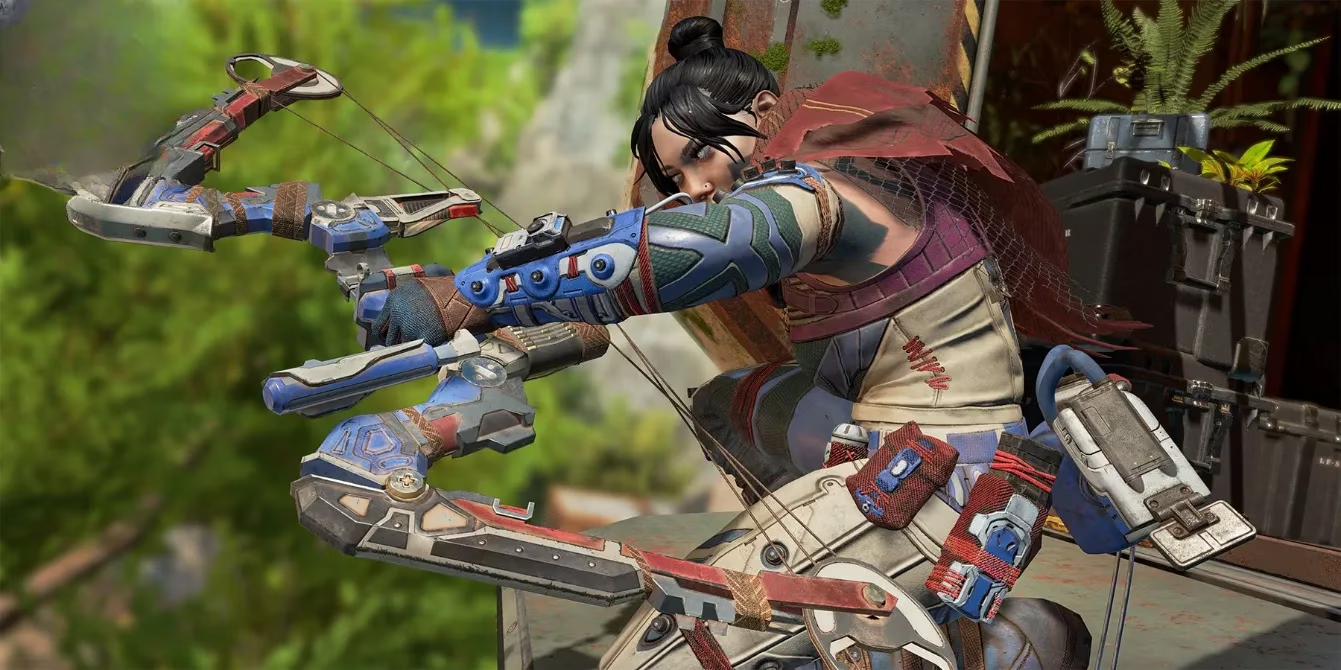
The list opens with a tier that Apex players know all too well: run in, get 1v3’d, get knocked, and leave. Wraith and Octane occupy this space, and the joke writes itself. Wraith has long been associated with the TTV stereotype—the player who breaks off from the squad, sprints into a fight, gets immediately punished, and then disconnects or quits. Octane, meanwhile, is the legend most likely to treat a tactical ability as a permission slip to sprint into a three-stack. Are all Wraith and Octane players like this? Of course not. But the community’s shorthand persists because the pattern is common enough to be recognizable.
The tactical and ultimate betrayals
The next category is described as betrayed by their tactical, and it includes Pathfinder, Bangalore, and Valkyrie. The logic is simple: abilities that feel like escape tools can become traps. Bangalore’s smoke can blind her own squad or fail against enemies with digital threats and thermal optics. Valkyrie’s jetpack gives her angles, but it can also leave her exposed mid-flight to a clean R-301 beam. Pathfinder’s grapple is one of the most expressive movement tools in the game, yet a bad swing can fling him directly into enemy crossfire.
A separate tier for legends betrayed by their ultimate belongs to Ash and Bloodhound. Ash can use her portal to reposition aggressively, but the same tool can send her into a situation she cannot escape. Bloodhound’s Beast of the Hunt is powerful, but its sound cues and visual effects can announce the hunt to everyone nearby. In both cases, the ability is not weak; the problem is the confidence it inspires.
Too confident, too exposed
The list then gathers Mirage, Revenant, Fuse, Seer, and Horizon into a tier for legends who are too confident in both their tactical and ultimate. This is less about any single mechanic and more about player psychology. Mirage’s decoys encourage risky pushes. Revenant’s totem can make a squad feel immortal until the timer runs out. Fuse’s knuckle cluster and Motherlode invite players to stand their ground. Seer and Horizon have kits that reward aggressive information plays and vertical movement, but aggression without coordination is how legends end up back in the lobby.
| Tier label | Legends | Community read |
|---|---|---|
| Run in, 1v3’d, knocked, and leaves | Wraith, Octane | High-speed solo aggression, followed by an early exit |
| Betrayed by their tactical | Pathfinder, Bangalore, Valkyrie | Movement or utility that can backfire |
| Betrayed by their ultimate | Ash, Bloodhound | Aggressive ultimates that can announce or strand the user |
| Too confident in both | Mirage, Revenant, Fuse, Seer, Horizon | Kits that encourage overcommitting |
| Caught in the wide open | Caustic, Wattson, Rampart, Loba | Defensive setups or repositioning tools that fail in open ground |
| Abandoned by the team | Crypto, Lifeline | Split attention and solo deaths |
| Dummy thicc | Gibraltar | A large hitbox offset by a gun shield |
Open fields, solo deaths, and Gibraltar
The wide, wide open tier is occupied by Caustic, Wattson, Rampart, and Loba. For the first three, the reasoning is almost self-evident: defensive legends built around holding buildings and chokepoints are far less effective when forced to cross open ground. Loba is a slightly different case. Her tactical can move her out of danger, but the animation and landing point can leave her exposed. Once she reappears, a sharp opponent can lock on and finish the job. It is another example of an ability that looks like a clean escape until the enemy team is paying attention.
Crypto and Lifeline land in the abandoned by their team and dies alone tier. Lifeline can be a victim of poor positioning or a player who queues as a support legend without actually supporting. Crypto’s drone gives his squad information, but it also pulls his attention away from his own body. In casual matches, that split focus can be fatal. The category is harsh, but it captures a real tension between playing for the team and playing for yourself.
Finally, Gibraltar sits alone in the dummy thicc tier. His large frame makes him an easy target from almost any angle, even if his gun shield can absorb damage from the front. The joke is affectionate rather than cruel. Gibraltar remains one of the most recognizable legends in Apex Legends, and his size is part of what makes him both a reliable anchor and a convenient target.
Why the joke still works in 2026
Apex Legends has changed dramatically since Season 11. The roster has grown, maps have rotated, and balance updates have reshaped which legends dominate ranked play. Yet the tier list remains funny because it is not really about balance. It is about the shared experience of watching a squadmate make a terrible decision and then watching that decision play out in real time. The TTV Wraith joke, the Bangalore smoke failure, and the Gibraltar hitbox are all part of the game’s social vocabulary.
Is the list unfair to some legends? Certainly. Is it accurate for every match? No. But that is the point of a community tier list built around death, not victory. It turns frustration into a running joke, and in a live-service game that never stops changing, that kind of humor can be just as enduring as any meta. Apex Legends remains a game about adaptation, but sometimes the most familiar lesson is the one players learn after they break off from the squad and get knocked: the lobby is always waiting.