
Stepping onto the fractured lunar surface of Broken Moon for the first time in 2026, I was struck by the sheer ambition of Respawn Entertainment's latest creation. As a seasoned Apex Games competitor, I know that a new map is a monumental event, fundamentally reshaping the flow of combat, strategic rotations, and the very character meta we've come to understand. Broken Moon, arriving with Season 15 and the enigmatic legend Catalyst, promised a fresh combat arena, and my initial deployment proved it delivers a distinct, chaotic, and beautifully divided experience. Based on my conversations with the developers and countless drops, this isn't just another battlefield; it's a lesson in controlled chaos and elegant design.
Drawing from the Past, Forging a New Path
Naturally, I find myself comparing it to the maps I've fought on for years. In terms of scale, Broken Moon feels most akin to World's Edge—a size the developers, like Jeff Shaw mentioned, found optimal for the rhythm of firefights and overall match duration. However, the team clearly took crucial lessons from other arenas. From Storm Point, they learned about the impact of sheer scale on drop patterns and match pacing, choosing not to replicate that overwhelming vastness here. The most significant quality-of-life improvement, however, comes from the lessons of Olympus. Eduardo Agostini pointed out the team's aversion to 'hard fails'—those frustrating, instant-death pits. On Broken Moon, the terrifying void of space is often held at bay by the planet's Stasis Net. In many areas, falling off a ledge doesn't mean certain doom; instead, you're caught and updrafted back to safety, a system reminiscent of but more forgiving than World's Edge's lava geysers. This design choice reduces cheap deaths and encourages more aggressive, vertical play, which is essential for the map's flow.
A Landscape of Stark Contrasts and Grand Scale
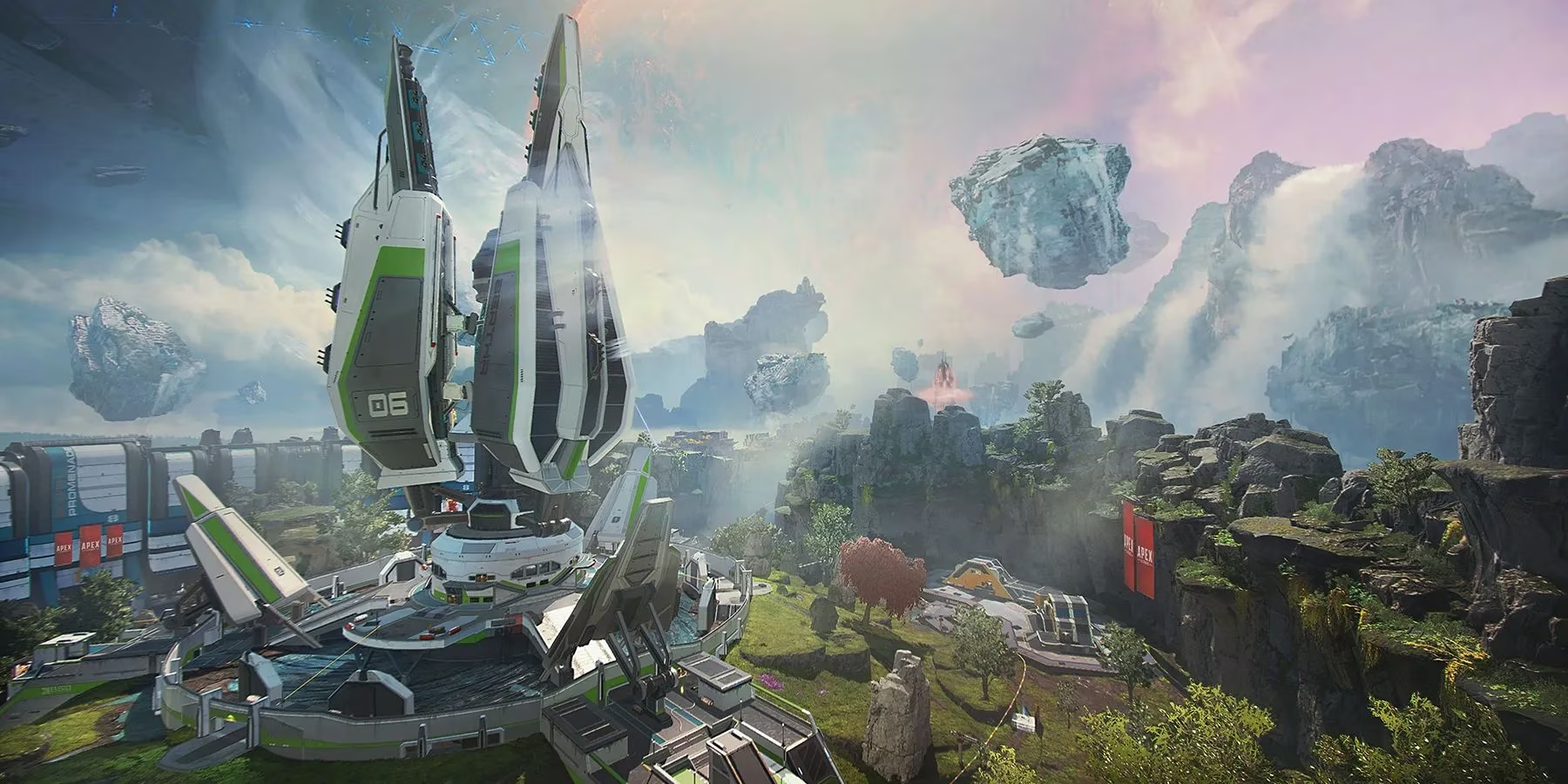
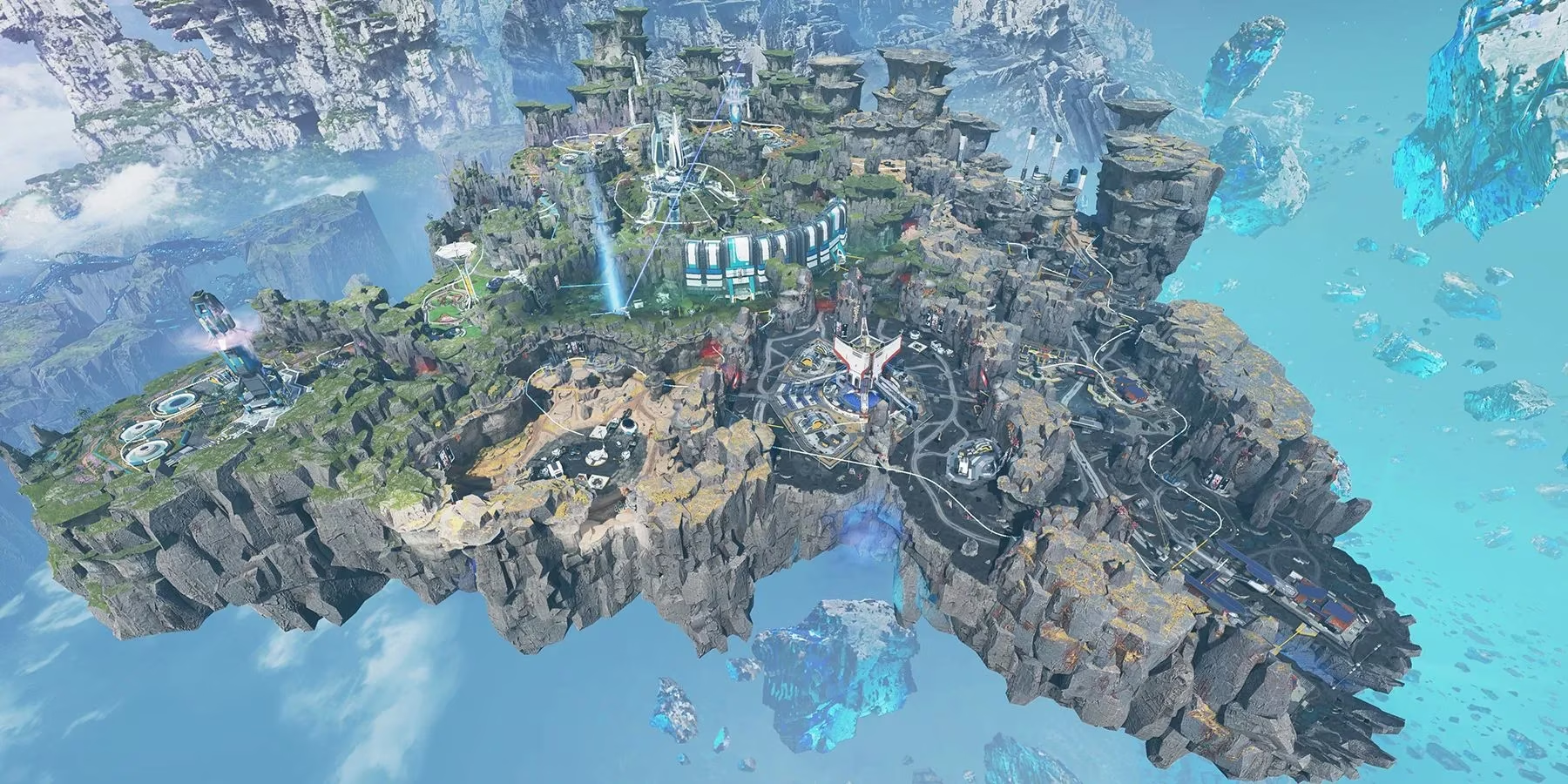
The visual and thematic identity of Broken Moon is its most captivating feature. The developers spoke of avoiding a 'depressing' monochrome landscape of moonrock and desolation. They succeeded spectacularly. The map is defined by a major divide: the foreboding, dark sides of the moon juxtaposed against stunningly maintained, vibrant areas. One moment you're navigating the eerie silence of a dead zone, the next you're fighting through the lush, artificial beauty of the Eternal Gardens. This motif of contrast extends to the Points of Interest (PoIs), which are notably larger than those on previous maps. This expanded scale is a game-changer. When multiple squads converge on a hot drop, there's genuine room to maneuver, loot efficiently, and set up tactical engagements rather than immediately brawling over the first Mozambique you see. It rewards smart positioning and patience, not just pure aggression.
The Ziprail Revolution: Chaos with a Method
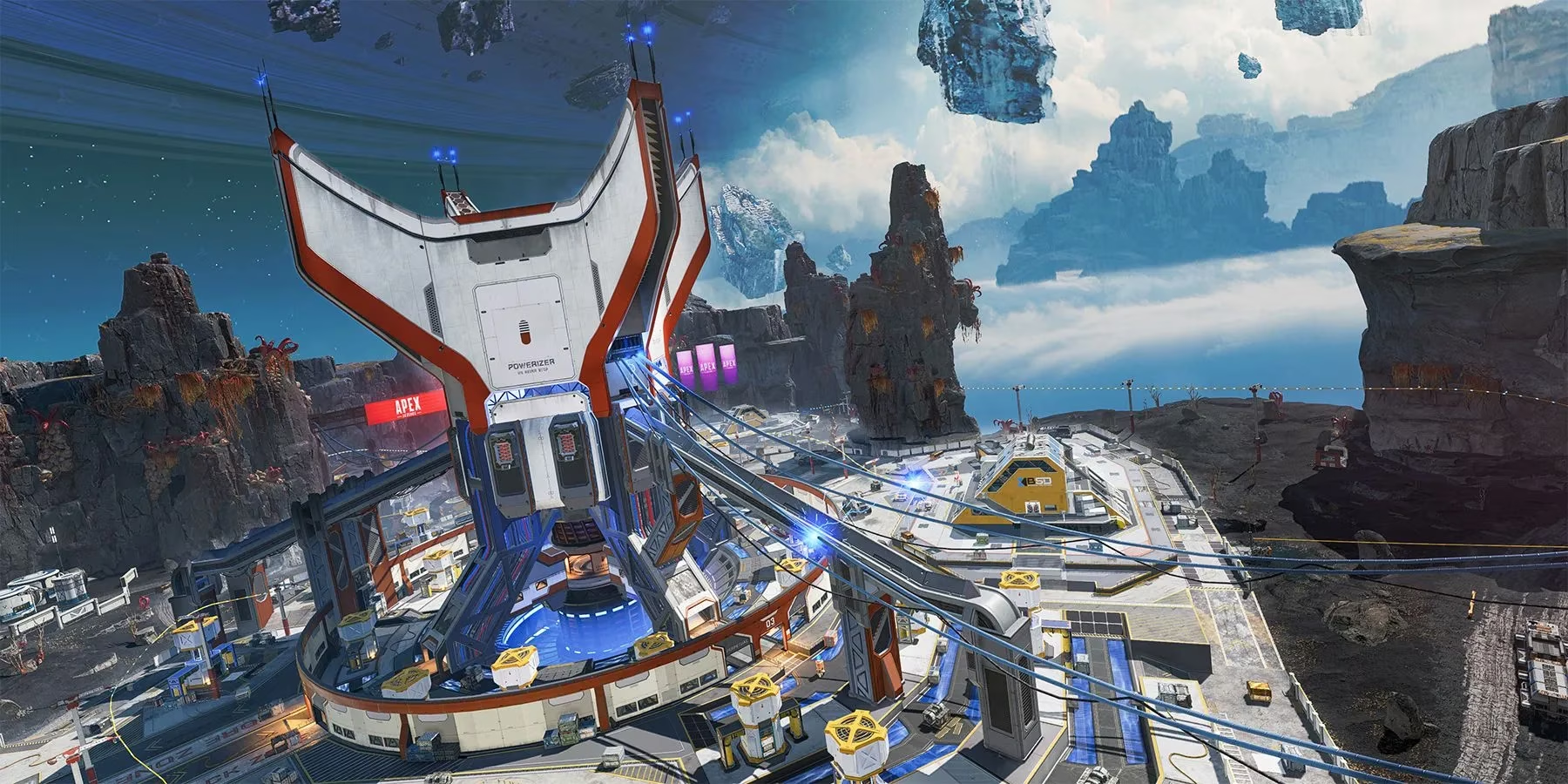
If there's one standout, defining mechanic for Broken Moon, it's the revolutionary Ziprail system. Shaw emphasized how the team leaned heavily into movement, rotations, advances, and retreats. The Ziprails are the backbone of this philosophy. These high-speed transit lines connect PoIs, allowing for blisteringly fast rotations that would be impossible on foot. Agostini noted how natural they feel for traversing the map quickly. In combat, they add a fantastic layer of unpredictable chaos—enemy squads can reinforce or flank from unexpected angles in seconds. However, Shaw assured that there's predictability amidst the pandemonium. The rails have designated stops and starts, allowing astute players to anticipate traffic, set ambushes, or make calculated escapes. Mastering the Ziprail network is now as crucial as mastering your legend's abilities.
A Tour of Key Battlefields
Let me break down some of the most memorable locations I've fought in across Broken Moon's terrain:
-
The Promenades 😨: A massive, vertical landmark perfect for intense, focused hallway battles, constantly disrupted by Ziprails running through it.
-
Terraformer 👑: A colossal, symmetrical structure with a central 'king of the hill' area. Its design comfortably supports four landing squads, leading to epic multi-team showdowns.
-
Perpetual Core ⚡: A huge zone built for large-scale fights. The central core is a powerful position, but it's surrounded by numerous attack angles, preventing easy campers.
-
The Divide 🏃♂️💨: True to its name, this is a fast-paced, high-energy location of vertical houses connected by bridges and, you guessed it, Ziprails.
-
Eternal Gardens 🌿: Home to the moon's only Jump Tower, this lush area is a critical rotation spot and a beautiful respite from the lunar barrenness.
-
Production Yard & The Foundry 🎁: Both feature 'central honeypot' loot areas that act as magnets for players, guaranteeing action. The Foundry, in particular, with its two dividing arms, is a personal favorite for sustained engagements.
Final Thoughts on a Lunar Masterpiece
Years after its debut, Broken Moon remains a testament to Respawn's evolving map design philosophy. It's a map that respects your time by minimizing frustrating deaths, empowers your strategy with vast PoIs and unparalleled mobility, and dazzles your senses with its stark, beautiful contrasts. The Ziprail system alone has permanently altered how I think about rotation and map control. It encourages constant, dynamic movement, making every match feel unique. While it draws smart lessons from its predecessors like World's Edge and Olympus, Broken Moon forges its own distinct identity as a place of grandeur, division, and high-velocity combat. For any competitor dropping into the Apex Games today, mastering this fractured moon is not just an option—it's a necessity for victory. The arena has evolved, and I, for one, am thrilled to adapt.