
Playing Apex Legends in 2026, it's impossible to ignore how much the world of the Outlands feels alive and real. It's not just about the gunplay or the strategy—it's about the people. The legends. They chat, they bicker, they fall in love, and they live lives that feel authentic. As someone who's been dropping into Kings Canyon for years, the diversity isn't a checkbox; it's the beating heart of the game's story. I recently read an interview with lead writer Ashley Reed from a few years back, and it's fascinating to see how the team's philosophy has shaped the game we know and love today. They didn't just want to create fighters; they wanted to create a reflection of a hopeful future, a world where everyone has a seat at the table. And honestly, they've succeeded in a way few other games have.
So, how do you tell LGBTQIA+ stories in a battle royale? 🤔
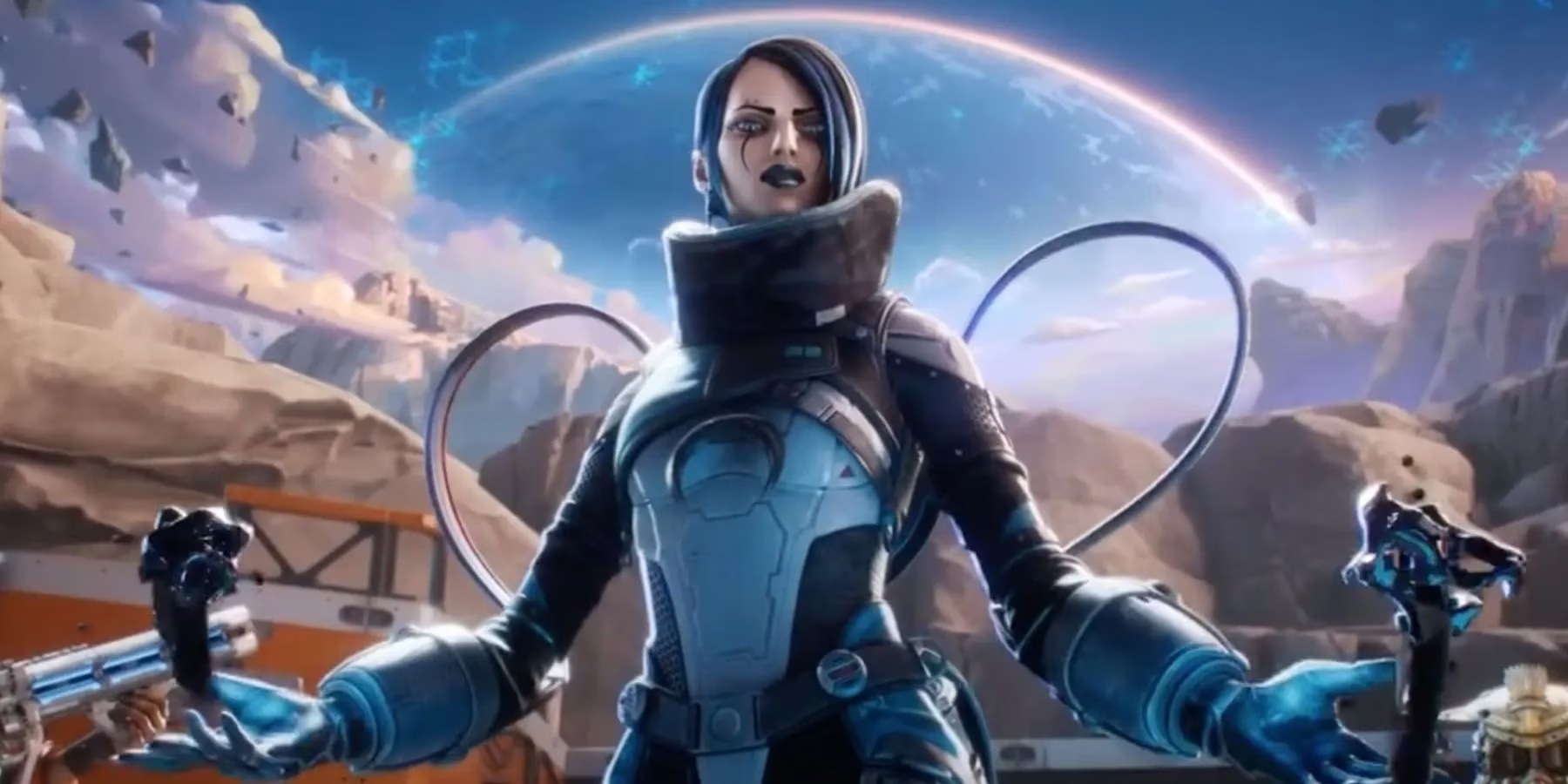
The answer is simpler and more profound than you might think. The narrative team integrates these storylines by giving the characters a space to talk about their lives. Since it's not a single-player campaign, you won't see a cinematic cutscene of a date in the middle of a firefight (imagine the timing!). Instead, you hear it in the chatter. You'll catch Loba and Valkyrie exchanging sweet nothings or playful barbs. Gibraltar might reminisce about his lost love, his voice full of a warmth that cuts through the chaos. And who could forget Catalyst proudly calling herself a 'grim trans witch'? These moments aren't forced lore dumps; they're organic snippets that make the legends feel like real people with ongoing stories.
-
Loba & Valkyrie: Relationship gossip mid-match? Yes, please.
-
Gibraltar: The big guy with an even bigger heart, always sharing his journey.
-
Catalyst: Owning her identity with iconic, powerful quotes.
The thought process behind this diverse roster is genuinely inspiring. The game is set 700 years in our future. For the writers, this meant two things: reflecting the beautiful diversity of the world we see today and painting a picture of a future where many of today's struggles are, hopefully, in the past. They wanted the roster to show the full breadth of human experience. It was never about tokenism. It was about creating a world where people of all identities aren't just present; they are heroes, villains, rivals, and lovers—central to the narrative.
Crafting characters that feel real, not like checklists.
This is where the magic happens. When designing a character, personality comes first. Always. Queerness is a part of someone's identity, not the whole identity. The team uses a character's core personality as their 'North Star.' Every other aspect of their identity—how they love, how they fight, how they speak—radiates from that central personality. This approach avoids creating stereotypes or 'hodgepodges of unrelated ideas.' It results in nuanced individuals like Bloodhound, the enigmatic hunter, whose non-binary identity is woven seamlessly into their mysterious persona.
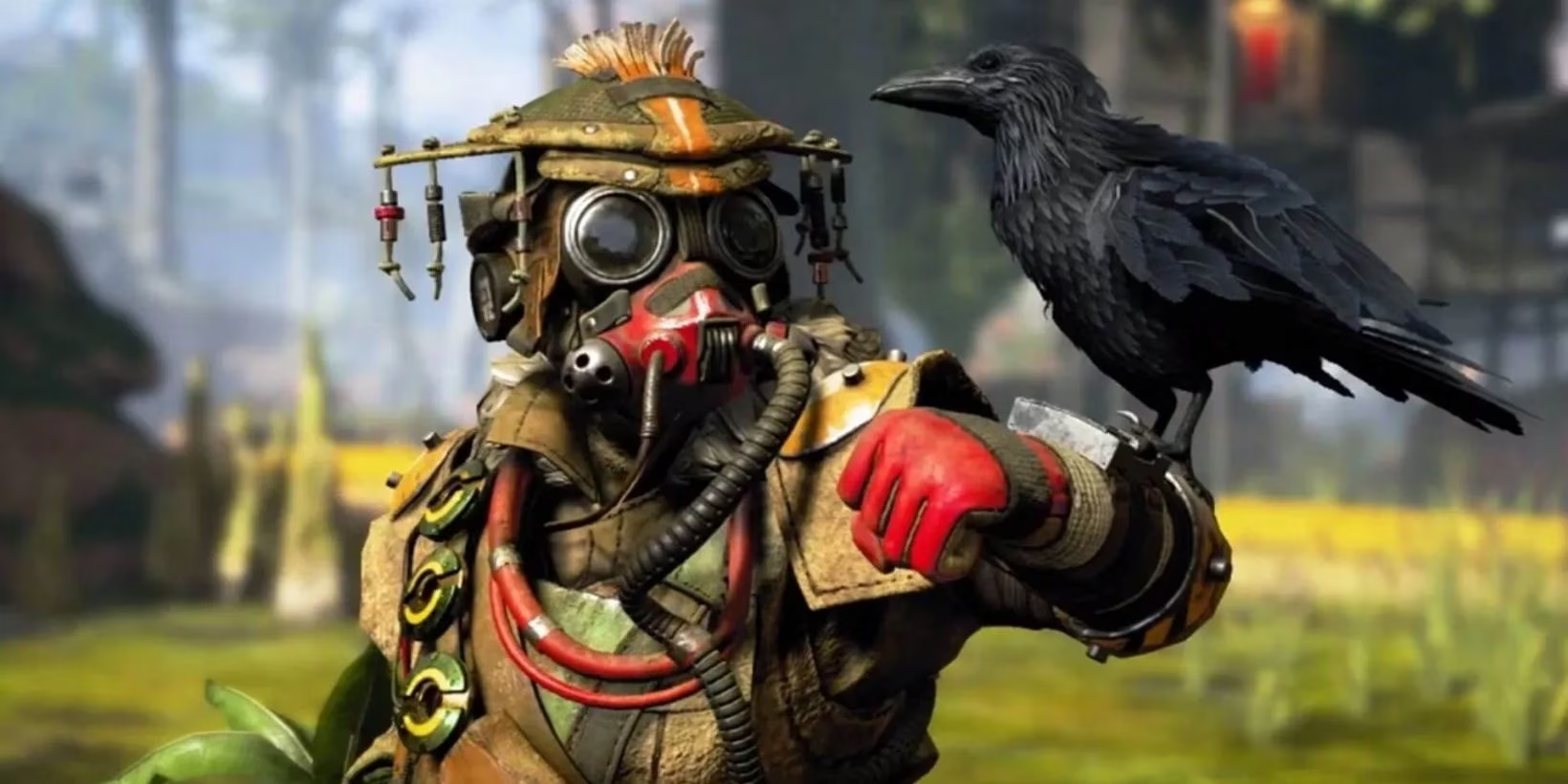
Creating authentic representation, especially for identities the writers might not personally share, requires care and collaboration. For characters like Bloodhound (non-binary) and Catalyst (trans), the team engaged consultants and developers from those communities very early in the process. They worked with groups like GLAAD for Catalyst to ensure authenticity and avoid unconscious pitfalls. Reed mentioned how writing for Bloodhound made her rethink the English language's reliance on pronouns in everyday use—a small but powerful insight that comes from this collaborative, respectful process.
What does this all mean for us, the players?
It translates into a game world and a community that strives to be welcoming. Respawn's 'come-as-you-are' philosophy for its workplace extends to the Outlands. The message to LGBTQIA+ players is simple and powerful: You are welcome here. We hope you see yourself in this future and feel like you belong. Playing in 2026, with even more legends having joined the games since that interview, this commitment is more evident than ever. The stories have deepened, relationships have evolved, and the world feels richer.
While the writers couldn't spill the beans on future trans characters back then, looking at the roster now, it's clear the commitment to diversity wasn't a one-time thing. It's a core pillar. The legacy of characters like Catalyst paved the way for more authentic, complex storytelling.
So, the next time you drop into a match, take a second to listen. Behind the explosions and the ping system, there's a world being built—one where everyone can be a legend. That's the real victory. 🏳️🌈✨
Happy Pride, Legends. Now, let's get that win.