
When Mad Maggie was unceremoniously shoved into the Apex Games, the Syndicate may have expected a quiet prisoner. Instead, players got a one-woman demolition crew with a whip-shield combo, a habit of arguing with Fuse, and a legendary tactical ability that popped Gibraltar dome bubbles like overripe fruit. But before she could start flattening squads, a nervous question hung over the community: would Respawn actually treat her Māori heritage with the respect it deserved? After all, Gibraltar had performed a haka emote years earlier, and the developer declined to confirm whether he was specifically Māori, leaving some fans with a side-eye sharp enough to slice a zipline.
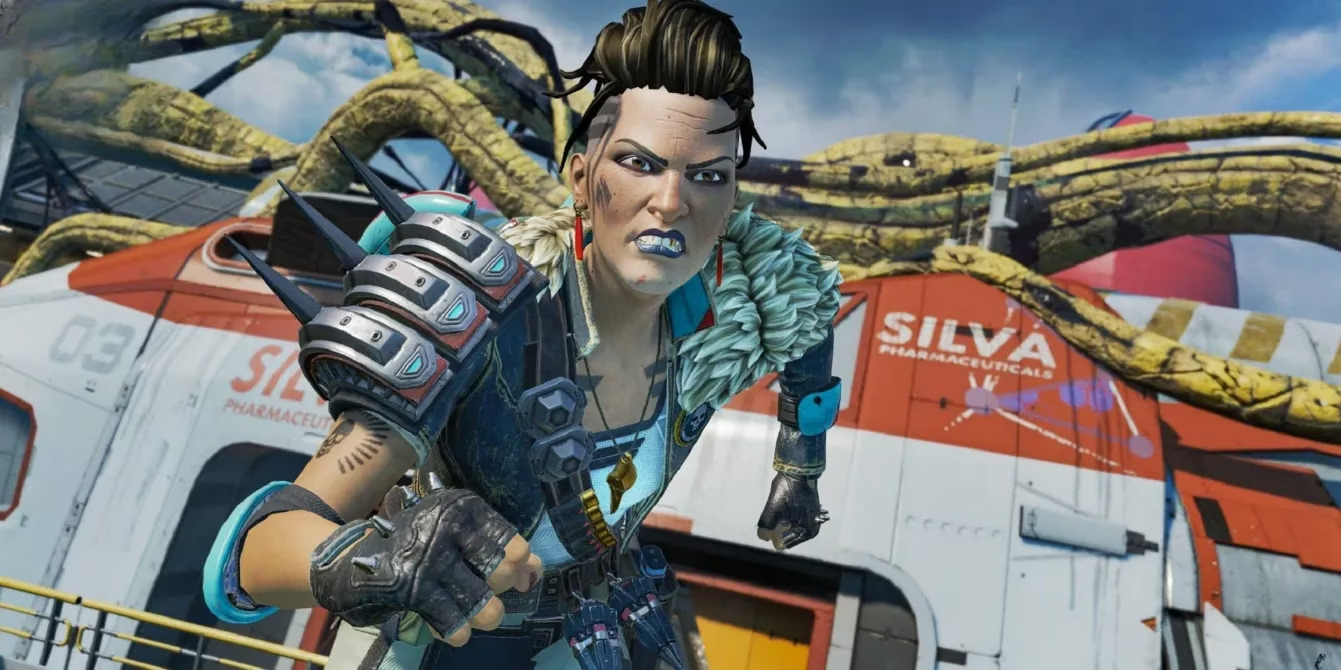
A Heritage Checked by the Right People
The good news arrived during a roundtable discussion, where narrative lead Sam Gill explained that Respawn had drafted a dream team. Instead of eyeballing Māori culture from a distance, the studio partnered with Māui Studios in New Zealand, specifically with Vincent Egan, a man so meticulous he probably could veto a line of dialogue before lunch.
Gill, a Kiwi himself, admitted that even local knowledge was not enough. Each Legend has roughly 1,600 lines of dialogue, a number that grows every season, and every single one of Maggie's lines went through Egan's hands. If a phrase felt off, he would nudge it. If a line could be more authentic, he would say so. He suggested pushing certain phrases in a uniquely Māori direction, recommended alternate expressions, and spotted opportunities that the writing team would have missed entirely. The result was not a surface-level costume party, but a character whose voice actually sounded like it came from Aotearoa.
The base skin also carries cultural touchstones. Some are obvious, like the patch designed by Egan's studio, while others are subtle details that Māori fans would immediately recognize. Legendary skins followed the same rule: heavily influenced, not merely decorated. For players who enjoy collecting cosmetics, this meant that spending crafting metals on Maggie felt less like buying a random outfit and more like picking up a small piece of cultural storytelling.
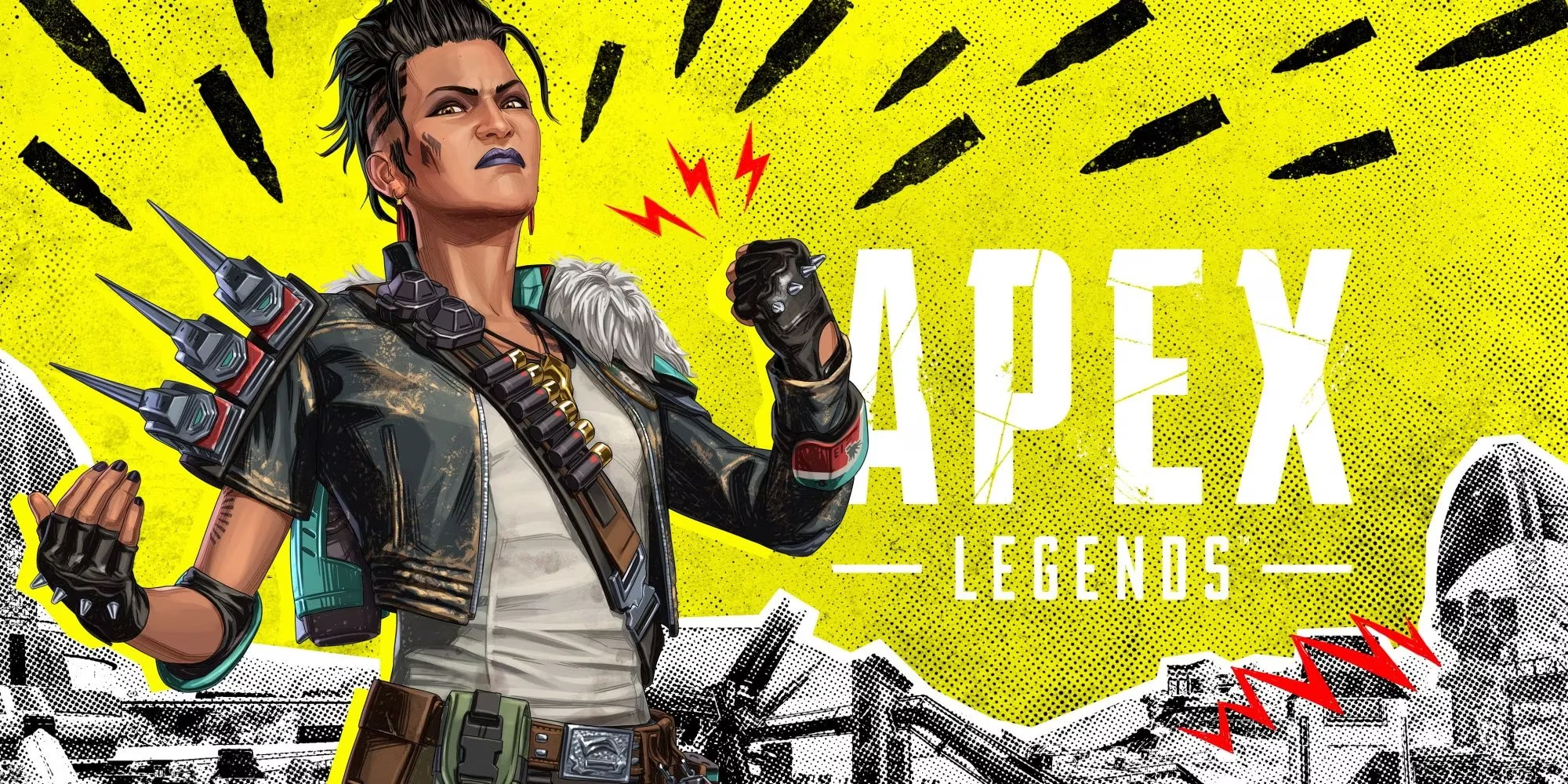
From Base Skin to Battle Cry
The deepest authenticity marker came from a moment in Maggie's Outlands trailer. Surrounded by Syndicate forces preparing to execute her, she draws strength from her ancestors and performs a haka. This was not a stock animation pulled from a library. Egan custom wrote the haka, and he did so with strong women in his family. His mother even suggested specific terms and phrases, making the moment personal and intimate rather than a generic battle taunt.
When voice actress Nicola Kawana delivered that haka at full strength and full volume in the booth, Gill admitted it gave him chills. That is the sort of detail that separates a respectful portrayal from a caricature. It is also why Maggie's arrival felt like a wrecking ball with a heartbeat.
Here is a quick authenticity checklist:
| Element | What Made It Authentic |
|---|---|
| Dialogue | Roughly 1,600 lines vetted by Vincent Egan |
| Base skin | Patch designed by Māui Studios |
| Legendary skins | Specific Māori-influenced designs |
| Outlands trailer | Custom haka written with whānau input |
| Voice acting | Nicola Kawana performed the haka at full strength |
The Missing Profit-Sharing Question
Not every fan was fully satisfied, however. Some Māori players suggested that consultancy alone is not enough. They argued that Respawn should set aside part of the revenue from Maggie's Legend and skin sales to support Māori game developers or cultural initiatives. It is a fair point: when a game profits from a culture, returning some of that money to the community seems like a natural next step. The question was posed to the studio, but no answer arrived in time for publication. Even in 2026, that specific profit-sharing idea remains a conversation starter rather than a confirmed policy.
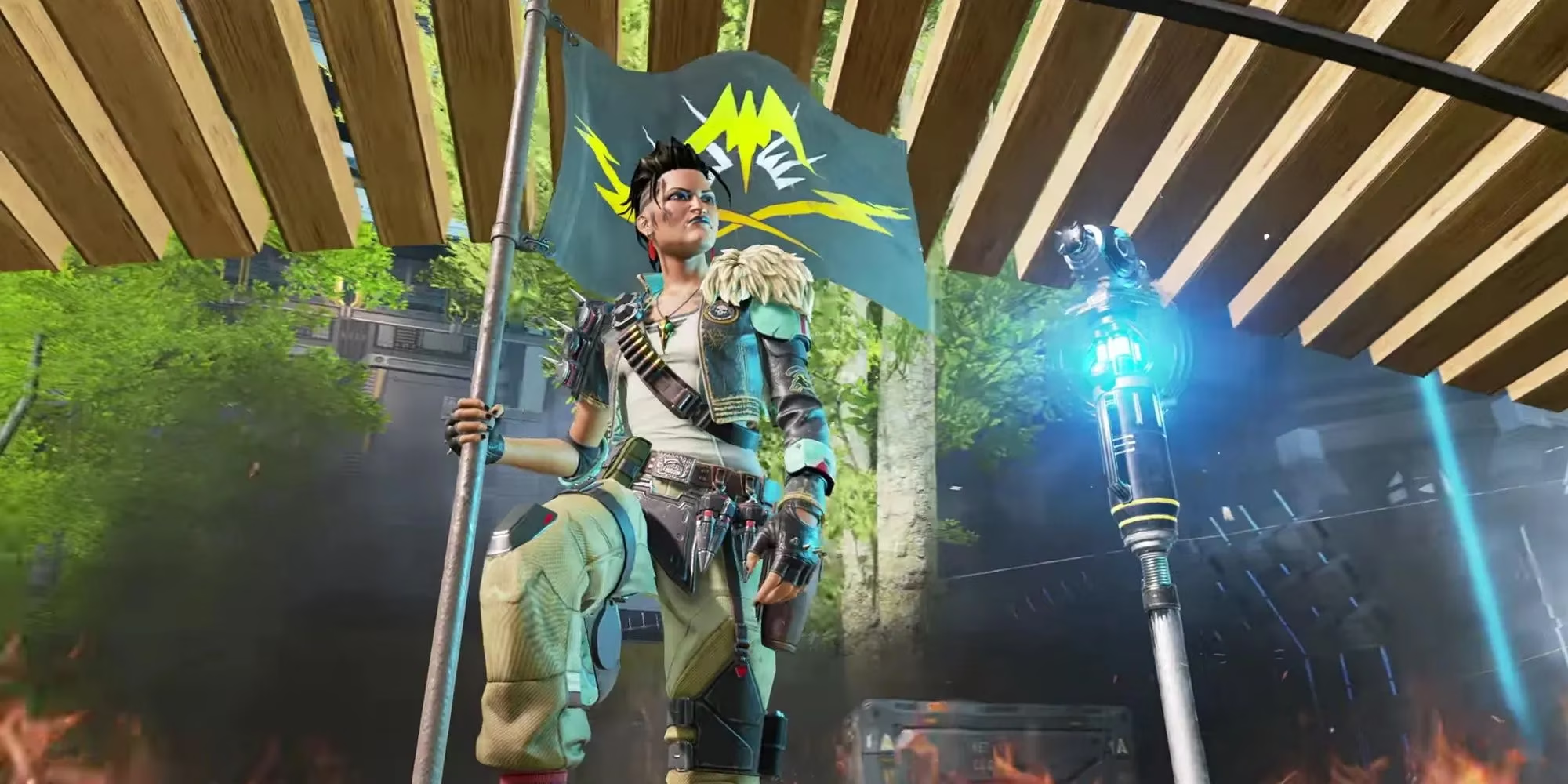
Still, Mad Maggie's Māori authenticity was a massive step forward for Apex Legends. From the vetted dialogue and cultural patchwork to the custom haka and a voice actress who nearly blew the recording booth doors off, Respawn did not just check a box. It built a character who could be aspirational in her own chaotic, bubble-popping, Fuse-arguing way. And if future Legends want to follow that blueprint, the first rule is simple: hire the people who actually live the culture, then listen when they say a phrase should be pushed just a little bit further.