
Mobile battle royale veterans and newcomers alike may remember the worldwide buzz when Respawn Entertainment first opened pre-registration for Apex Legends Mobile back in the spring of 2022. That summer, the game finally launched globally, and it has since carved out its own unique space in the competitive mobile gaming scene. Fast forward to 2026, and the anticipation that once required a pre-registration button has transformed into an ever‑evolving live service. The game still faithfully captures the core Apex experience—fast‑paced squad combat, distinctive Legends, and that signature ping system—while delivering exclusive mobile‑first content that even the PC and console versions sometimes envy.
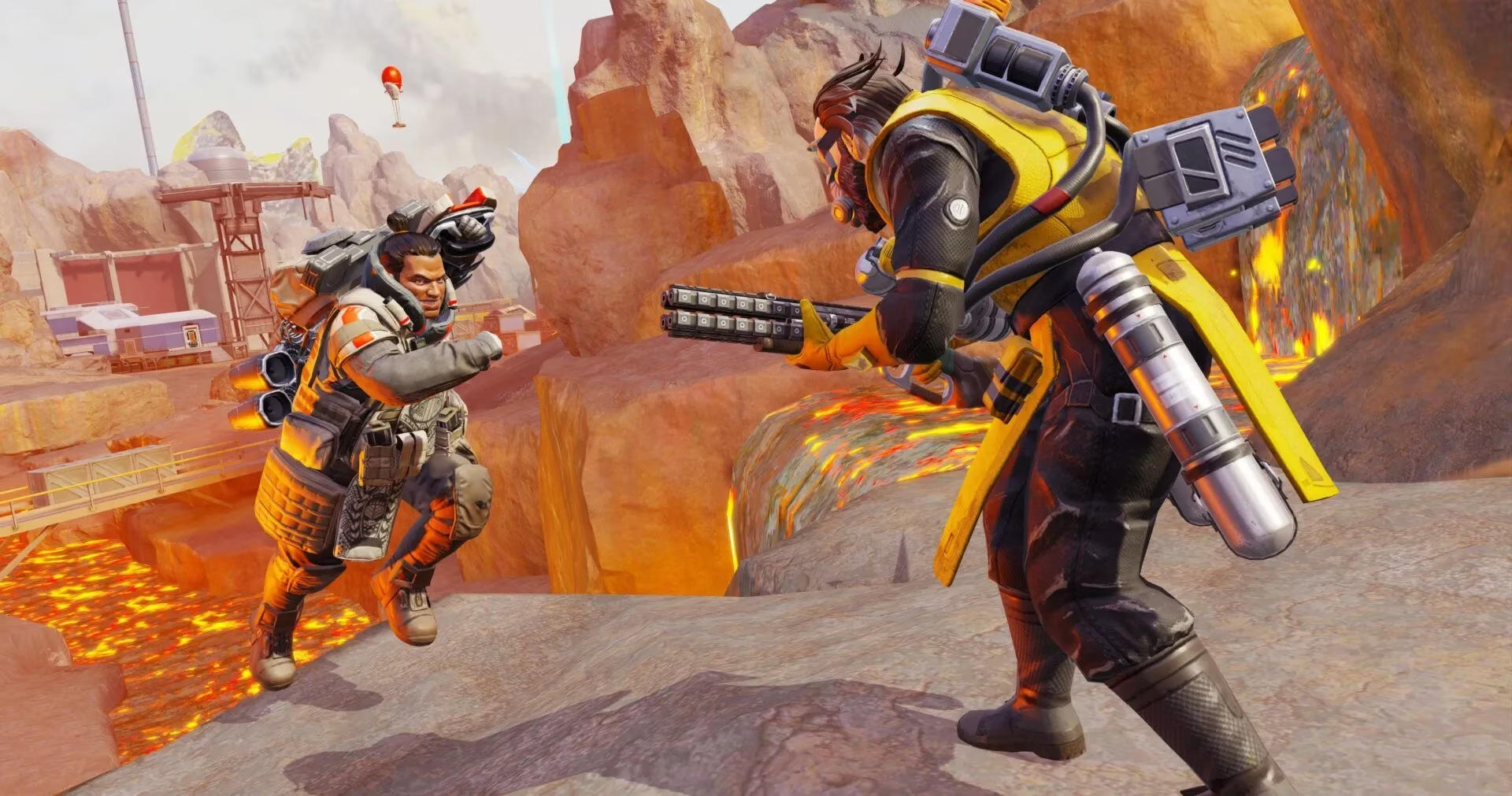
When the pre‑registration campaign originally kicked off, it was a straightforward affair. Android users hopped onto the Google Play Store, tapped the iconic green “pre‑register” button, and waited for a notification. iOS fans, on the other hand, had to visit the official EA website, enter their details, and hope for a timely email when the game dropped in their region. That early test phase was limited to a handful of countries—Australia, New Zealand, Singapore, Malaysia, the Philippines, Indonesia, Mexico, Peru, Argentina, and Colombia. Respawn and its co‑developer, Lightspeed & Quantum Studios, used those soft‑launch regions to fine‑tune the mobile‑first experience before opening the floodgates to the rest of the world.
Today, in 2026, you simply don’t need to pre‑register anymore. Apex Legends Mobile is available globally on both the App Store and Google Play. A quick search brings up the vibrant icon, and within minutes you’re dropping into Kings Canyon, World’s Edge, or one of the mobile‑exclusive maps like Pythas Block 0. The entire download and installation process is free, just as Respawn promised. The only real “wait” these days is for the initial data unpacking and maybe a cup of coffee while shaders compile on older devices.
That doesn’t mean the pre‑registration spirit is completely gone. Occasionally, for major anniversary updates or the arrival of a brand‑new Legend, the developers re‑introduce limited‑time pre‑registration campaigns where players can sign up early to unlock exclusive skins, weapon charms, and even limited beta access to upcoming features. In early 2026, for example, rumors swirl around a mysterious “Syndicate Rising” event that might bring back a timed pre‑registration window. So while the general public can jump right in, keeping an eye on the in‑game news tab and official social channels can still yield some old‑school pre‑launch goodies.
Since its global debut, Apex Legends Mobile has grown far beyond a simple port. The game was built from the ground up by Lightspeed & Quantum Studios specifically for touchscreens, which means every interface element, every recoil pattern, and even the aiming assists are tailored for thumbs, not mice. The list of mobile‑first Legends now includes Fade, Rhapsody, and a few other surprises that later found their way—sometimes in remixed form—to the main game. Modes like “Quick Battle” and “Team Deathmatch” arrived early on mobile and have become permanent playlists, giving casual players a less sweaty alternative to the traditional battle royale. Progression systems, too, stand on their own, with mobile‑exclusive battle passes, seasonal challenges, and a completely separate ranked ladder that hosts its own global championships.
So what’s the best way to start in 2026? Here’s a quick rundown:
-
For Android: Open the Google Play Store, search for Apex Legends Mobile, and hit “Install.” The store page includes a handy “play on PC” beta link if you want to emulate, but most stick with pure mobile play.
-
For iOS: Head to the App Store, locate the official application by EA, and download. The game automatically links with your Apple ID for seamless sign‑in, though you can later merge an EA account for cross‑progression with your console or PC profile (cross‑progression was fully enabled in late 2024).
-
Account setup: Whether you’re a returning veteran or a fresh‑faced recruit, using an EA account is recommended. It saves your skins, stats, and cosmetic purchases across devices, and it’s necessary for participating in any global esports events.
-
Performance tips: The mobile build now supports up to 90 FPS on flagship devices and adaptive triggers on certain controllers. Lower‑end phones can still enjoy a stable 30 FPS with streamlined graphics, proving that Lightspeed & Quantum’s optimization journey has paid off.
When players first signed up back in 2022, they were promised new maps, modes, and events. Fast forward to 2026, and those promises have been delivered tenfold. The map pool has expanded to include Olympus and the mobile‑exclusive Fragment East, a condensed urban arena designed for rapid third‑partying and intense close‑quarter fights. Seasonal events now often cross over with other EA franchises, and the introduction of “Legend Augments”—temporary ability modifiers that shift the meta every two weeks—keeps the experience fresh for even the most dedicated streamers.
Perhaps the most rewarding change is how the community has matured. Despite early skepticism, Apex Legends Mobile has forged its own dedicated player base that doesn’t just mimic the PC and console meta but invents its own. Touchscreen‑specific movements like the “slide‑hop‑ping” combo have become an art form. And because the game remains completely free‑to‑play, with no pay‑to‑win mechanics, it continues to attract both casual squads and aspiring pro players.
If you’ve been on the fence since those pre‑registration emails landed in your inbox four years ago, there’s never been a better moment to deploy. The download is fast, the servers are packed, and the Outlands are waiting. Just remember: glory comes to those who stick together, ping wisely, and never underestimate a mobile Rampart with a fully deployed minigun.
Data referenced from Liquipedia helps frame how Apex Legends Mobile’s 2026 competitive scene has matured beyond its 2022 launch hype: as ranked ladders and seasonal championships expand, clearer tournament histories and roster tracking make it easier for fans to follow emerging regions, meta-defining Legend picks, and the rise of mobile-specialist squads that play differently than their PC/console counterparts.