
I still remember the first time I loaded into Control during Season 12: Defiance. It was early 2022, and I had been grinding Apex Legends’ battle royale for months. The idea of a 9v9 mode with unlimited respawns sounded almost like a different game, but I was curious enough to queue up. Now, in 2026, Control has become a permanent part of my Apex routine, and that first three-week limited-time run was the moment I realized Respawn had stumbled onto something truly special.
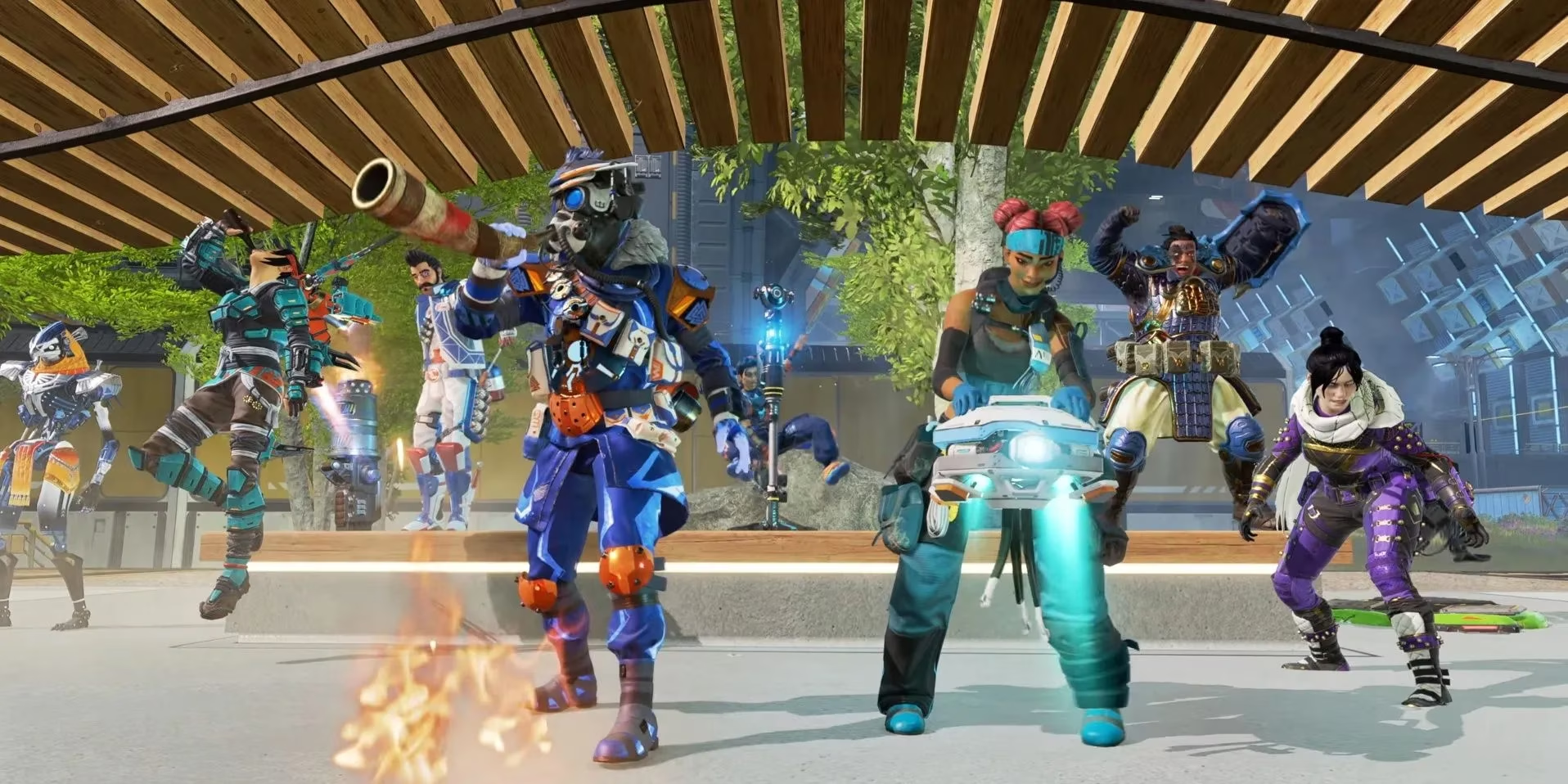
The biggest shock was how different Control felt from Apex’s core battle royale. Instead of living once and looting for minutes, I was dropping onto a familiar map with seventeen other players split into two teams. The objective was simple: capture and hold three zones. Each captured objective earned one point per second, and the first team to reach a score limit of 1,250 won. If my squad held two of the three objectives, a match would wrap up in around ten minutes. That shorter, more focused pace was a welcome change from twenty-plus minute BR matches.
Respawn did not just chop a random piece of a map for Control. They built the mode around Hammond Labs on Olympus and Barometer on Storm Point, adding extra cover, jump towers, Trident vehicles, and ziplines to make rotating between control points feel fluid. I could approach familiar locations from completely new angles, using routes that simply did not exist in the standard battle royale version. That fresh perspective kept every Control match interesting.

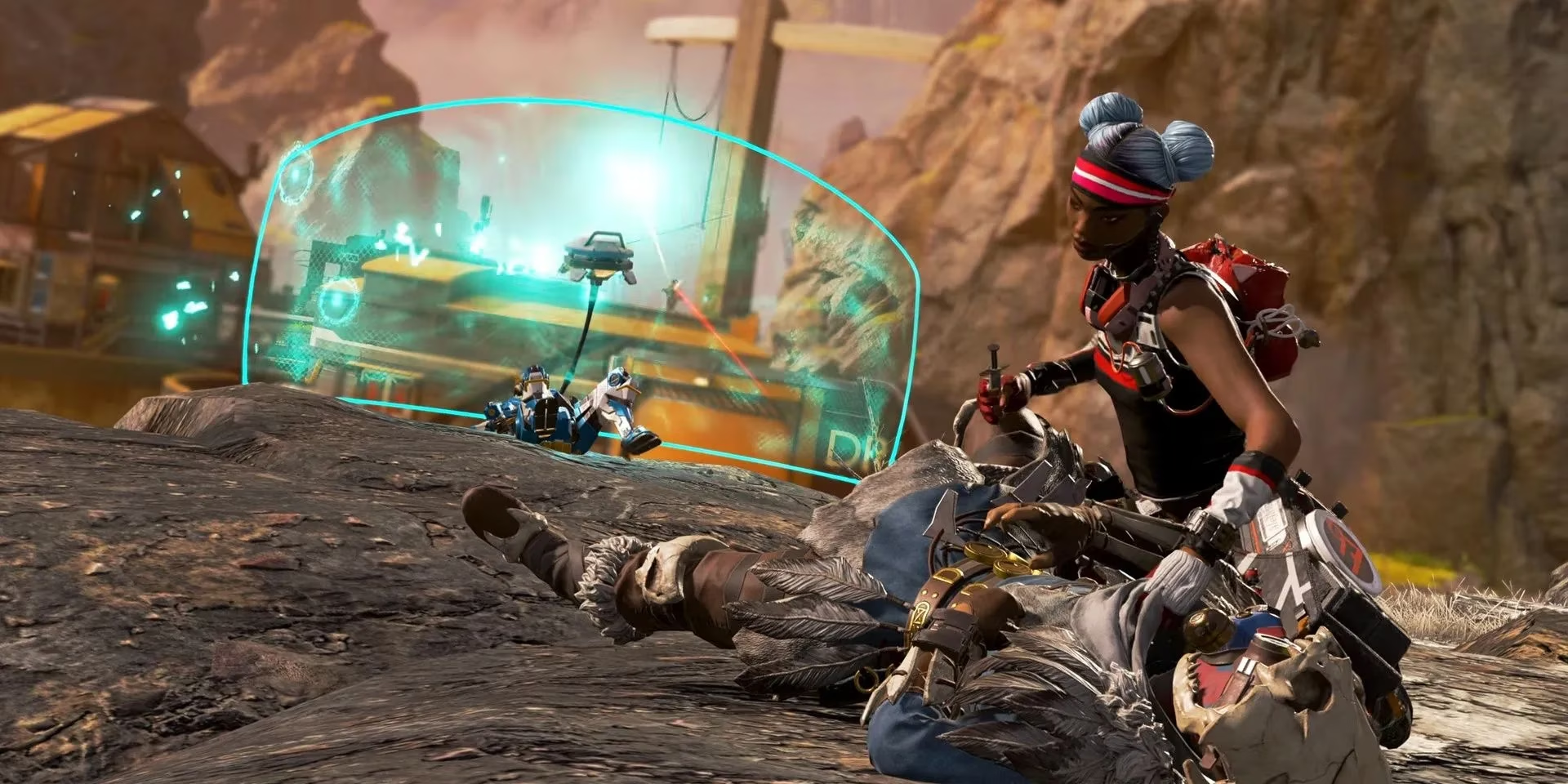
One of the early community concerns was that Control might suffer the same fate as Solos, an LTM Respawn chose not to make permanent. In Solos, many legends’ team-focused abilities became useless, which hurt new player retention. Control does the exact opposite. With nine legends on each squad, supportive kits suddenly have room to shine. I have watched a Crypto drone expose an entire capture point, while a Wraith portal instantly relocated our whole team from one objective to another. That kind of large-scale coordination felt refreshing and made me appreciate legends I had previously ignored.
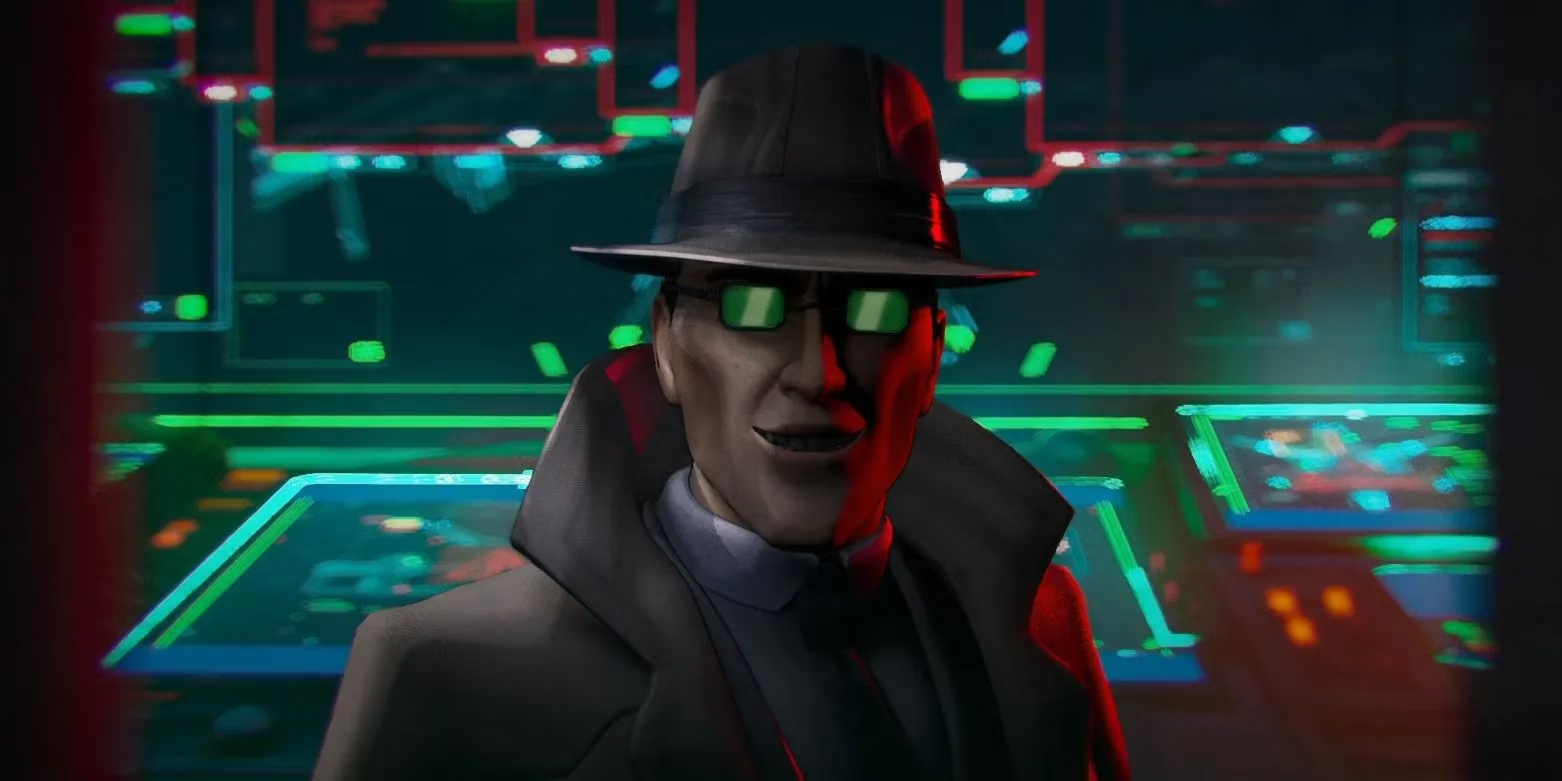
Control also expanded Apex lore in a way that felt natural. Officially, the mode was a sponsored sideshow from the Apex Games, hosted by Silva Pharmaceuticals. That shadowy corporation is run by Duardo Silva, Octane’s father and a notorious billionaire criminal. Silva had already appeared in the in-game comics and had ties to terrorist acts throughout the Outlands. According to Lifeline, he was even trying to take over the Syndicate. Playing Control while knowing this background gave each match an extra layer of tension, as if I was participating in a larger story rather than just a casual mode.
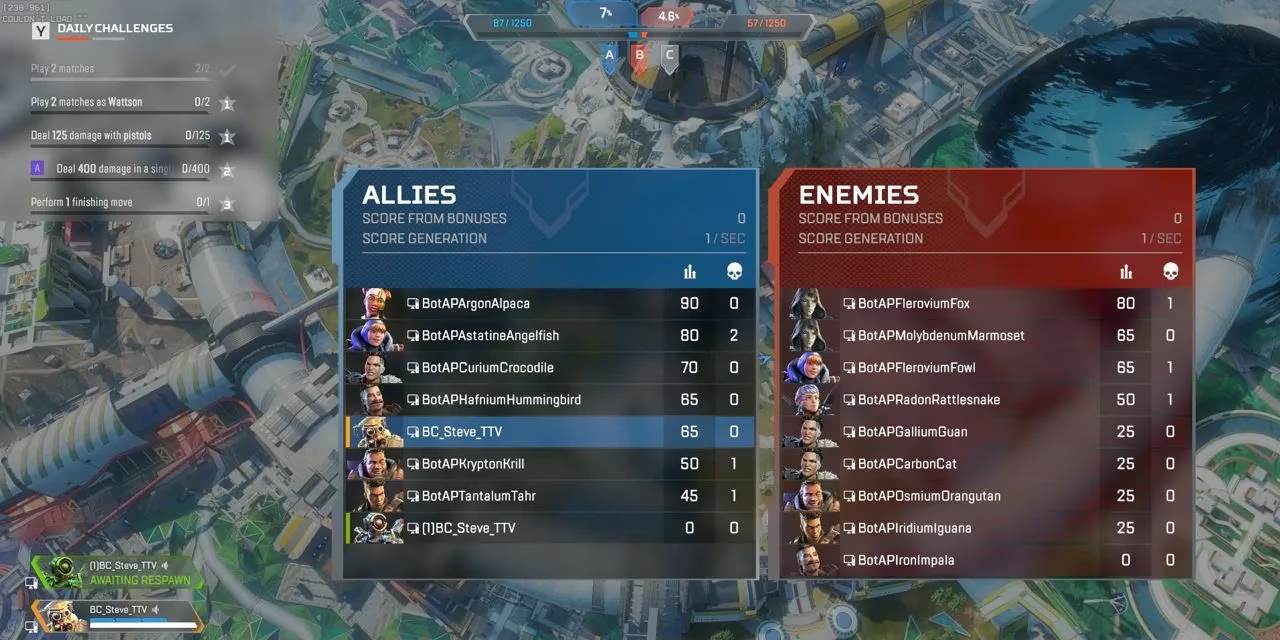
Another feature that hooked me was the Ratings leaderboard. Apex battle royale had always announced the champion and kill leader, but there was never a full scoreboard to compare my stats against everyone else in the lobby. Control changed that. By playing the objective and getting kills, I could raise my Rating and see exactly where I stood among a large group of opponents. For a numbers-focused player like me, this small addition made every capture and elimination feel more meaningful.
Time is precious in 2026, and Control still gives me a much-needed shorter, more casual option. Many days I only have twenty or thirty minutes to play after work. A traditional BR match often demands too much time, especially if I survive deep into the final rings. Control fits perfectly into that gap. I can drop in, fight constantly, and still have time to warm up before ranked or simply enjoy a few quick matches.
Beyond the fun, Control has become my go-to warmup mode. In battle royale, it is easy to go long stretches without fighting, which puts players just logging on at a disadvantage against opponents who have been online for hours. Control’s unlimited respawns remove that penalty. I can practice recoil control, test different legend kits, and improve my map awareness against real players without the fear of being sent back to the lobby. That low-pressure environment has made me a much more confident BR player.
Over the years, 9-player squads have also produced wild emergent gameplay moments. When Respawn breaks the three-person squad formula, players inevitably discover new ability combinations that shift the meta. I still remember the old Gibby shield and Caustic trap combo, but Control opened the door to even bigger experiments. Some of those discoveries eventually made their way into ranked and competitive play, proving that Control was never just a throwaway LTM.
Looking back from 2026, I am grateful that Respawn took the risk. Control started as a limited-time experiment in Season 12: Defiance, but its fast pace, team-focused design, and lore integration turned it into a permanent fixture of Apex Legends. Whenever I log in now, my first stop is almost always Control, and I doubt that habit will change anytime soon.